Commercial Waste Removal in Stockwell

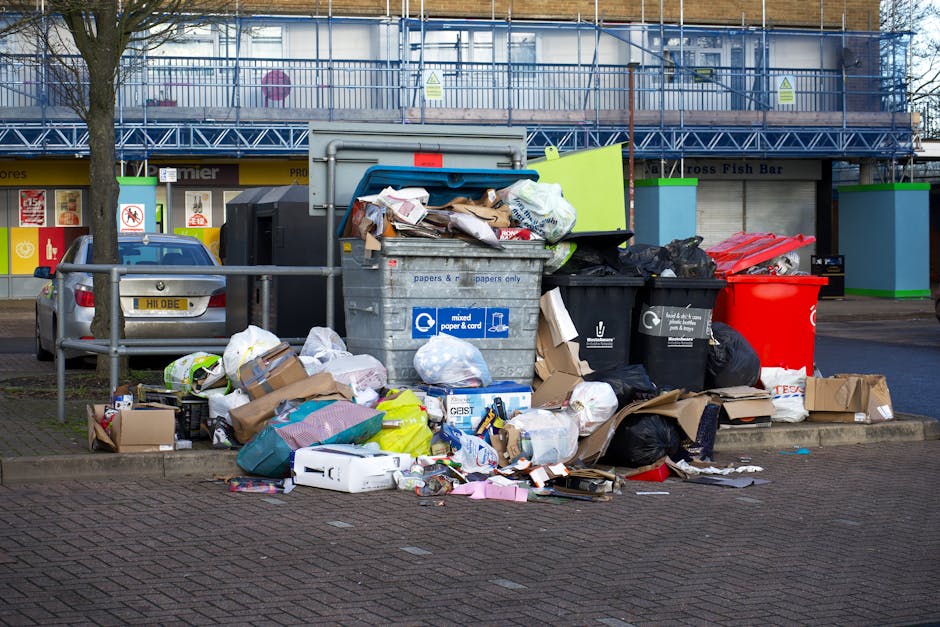
Commercial waste removal in Stockwell should be straightforward, well organised and suited to the way local businesses actually work. We clear office waste, shop waste, stockroom rubbish, packaging and mixed non-hazardous commercial material, with an approach that keeps collections practical for busy premises. Whether the task is a one-off clearance or a recurring uplift, the aim is to remove waste efficiently while helping you keep your site tidy, accessible and ready for the next working day.
Our service is built around the kinds of waste that arise in everyday trading environments: cardboard, plastics, broken fixtures, redundant furniture, archive material, general rubbish and other items that need careful handling. We can also support businesses that are changing layout, reducing storage or clearing out surplus items after a fit-out. If you need a clear, dependable way to handle unwanted material, our commercial waste removal service in Stockwell gives you a simple route from clutter to cleared space.
For a quotation, it helps to have a brief description of the waste, the access conditions and the volume involved. If you already know whether the load includes heavier items, mixed materials or anything that needs separate treatment, that is useful too. Clear information at the outset usually makes planning easier, and it helps us suggest the most suitable collection approach for your business.
Office and business waste collections
Office and business waste collections cover the everyday items that build up in workspaces, back rooms and shared storage areas. That may include desks, chairs, filing cabinets, boxed paperwork, monitors, cables, packaging, old display units and general clear-out material. The service is useful when a workspace is being refreshed, a lease is ending, storage needs to be reduced or a team simply needs to remove accumulated clutter without interrupting operations for long.
We also deal with mixed business waste that does not fit neatly into one category. Some premises generate a combination of paper, plastics, soft furnishings and general rubbish, and that often needs a considered load arrangement rather than a single-purpose collection. Business waste removal is a practical option when your premises need an organised uplift that keeps mixed waste separated where appropriate and moved away promptly.
Typical items and work stages
Common office and business collections can include one-off clearances, periodic waste uplifts and removal after internal rearrangement. A good collection process usually starts with identifying the items to be removed, then separating anything reusable, recyclable or requiring special handling. We then load the waste in a way that suits the site layout, which is especially helpful where access is tight, corridors are shared or there is a need to work around desks and stock areas.
Clearance for shops, storerooms and trade premises
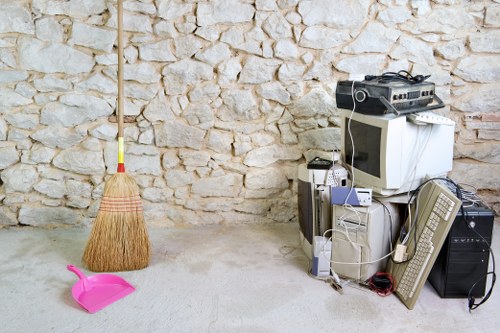
Retail and trade premises often need waste removal that fits around opening hours, deliveries and customer movement. Stockrooms can fill with damaged packaging, broken shelving, outdated signage, returned goods and redundant display equipment. Workshops and light industrial spaces may produce offcuts, general rubbish, worn fixtures and bulky items that should not remain on site any longer than necessary. A tailored clearance helps these areas stay orderly and safer to use.
Commercial collections can be planned for spaces that have awkward access, loading restrictions or multiple waste types. That might mean removing items from the front of a shop, a rear store, an upstairs office or a shared service yard. When a premises has several waste streams in one place, it is often useful to deal with them in a single organised visit rather than leaving separate piles for different dates. Waste removal is a broad service option for businesses that need mixed non-hazardous material taken away without unnecessary complexity.
For stores and workplaces, good preparation is often less about long checklists and more about clarity. A brief inventory of what needs to go, plus a note of any restrictions on access or parking, can make the collection smoother. If you are planning a refurbishment or stock change, the key question is usually which items must be removed first so the space can keep functioning while the rest is sorted.
Bulky item disposal and furniture clearance
Many commercial clearances are driven by furniture rather than loose rubbish. Offices, salons, practices, cafes and shared workspaces often need old desks, chairs, tables, cabinets, shelving and waiting-room furniture taken away when the layout changes. Bulky item disposal is useful because large items can be awkward to move, hard to store and unsuitable for ordinary waste containers. A structured uplift reduces the chance of items being left in corridors, basements or storage rooms for longer than necessary.
Where furniture forms part of a wider clear-out, we can remove individual pieces or complete room contents depending on what the business needs. Some sites only need a few redundant items collected; others have a mixture of furniture, fixtures and packaging. Furniture clearance is the relevant service when the main task is to clear furnishings in a business setting, while furniture disposal suits jobs where those items need to be taken away as waste rather than shifted elsewhere on site.
It is sensible to distinguish items that are still usable from those that are beyond practical repair, because that can affect how they are handled. Office chairs with damaged frames, broken desks and worn storage units often need direct removal, while some components may be separated first if they can be processed more efficiently. The aim is to keep the clearance orderly and avoid unnecessary handling at the property.
Shop, office and premises-specific clearances
Different commercial spaces produce different kinds of unwanted material, and it helps to match the clearance to the premises. A home office, serviced office, retail unit and shared building each come with their own access points, storage arrangements and operating hours. That is why a useful removal service pays attention to the layout as well as the load itself. Business waste is not just about volume; it is also about moving items without disrupting the people who still need to use the space.
If your site has been reorganised, closed down internally or partially refurbished, the load may include a combination of furniture, general waste and equipment casings. In those cases, it is better to plan the uplift around the sequence in which items are no longer needed. A collection can begin with the largest obstacles, then move through mixed waste and smaller loose items so the site is left in a more workable state. That approach is especially useful for businesses that want one efficient visit rather than several small ones.
Items that often need separate attention
- Broken or unwanted office furniture
- Cardboard, packaging and wrapping materials
- Loose rubbish from store rooms and back offices
- Archived paperwork and redundant files
- Old fittings, display pieces and light fixtures
Sorting, loading and responsible handling
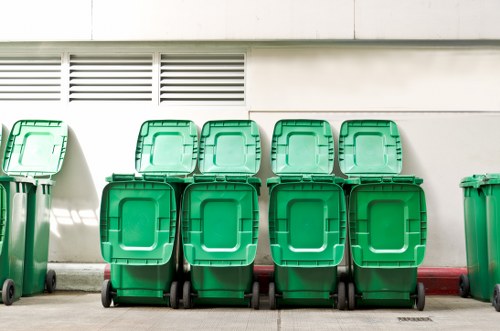
A well-run commercial waste removal job is not only about lifting items away. It also depends on sensible sorting before the vehicle is loaded. Mixed loads often contain recyclable material, reusable items and waste that should be kept apart for practical handling. When collections are organised with that in mind, the process is easier to manage and the site is less likely to be left with stray items after the main removal is complete.
For businesses, this usually means deciding which materials belong with the clearance and which should remain in place. Cardboard can often be grouped separately from bulky furniture, while loose office waste may need its own bags or containers. Recycling and sustainability is relevant where you want to understand how recoverable materials are approached as part of a broader commercial clearance. That can be helpful for premises aiming to keep their waste handling more structured.
We do not suggest that every load is identical, because commercial sites vary widely. A small office tidy-up and a large premises clearance are very different jobs, yet both benefit from a clear removal plan. If you are unsure how to describe the waste, a short note about the main categories is usually enough to begin. The important point is to keep the description accurate, not overcomplicated.
About Stockwell
Stockwell is an area in south London within the London Borough of Lambeth, known for its position between central and inner south London neighbourhoods and for the way its streets connect to Brixton, Kennington, Clapham and Vauxhall. The district grew through a long process of suburban development and transport change, with the arrival of the railway and later Underground links helping shape its modern form. Stockwell station, now on both the Northern and Victoria lines, reflects that transport history and keeps the area closely connected to the rest of the city. The locality also has strong architectural variety: some streets contain late Georgian and Victorian terraces, while other parts include post-war housing estates and later redevelopment. One of the best-known landmarks is the Stockwell war memorial and the open space around Stockwell Green, which recalls older village-like origins before London expanded around it. Nearby, Larkhall Park provides local green space, while the presence of the Oval and other major South London destinations gives the wider district a place in the city’s sporting and cultural geography. Stockwell’s identity has also been shaped by its diverse communities, reflected in shops, churches, restaurants and everyday street life. The area is not large, but it is layered with different periods of building and change, which makes its streets feel varied rather than uniform. That mixture of transport routes, housing, civic spaces and neighbourhood activity gives Stockwell a distinct character within inner London.
Commercial waste plans that fit your schedule
Business waste collections work best when they fit around operations rather than interrupt them. Some premises need an early visit before staff arrive; others prefer an uplift after closing time or during a quieter trading window. While the exact arrangement depends on the site, the principle stays the same: remove waste at a time that keeps the business functioning. That is particularly useful where access is shared, goods are delivered through the same entrance or customers need clear walkways.
When requesting a quotation, it helps to mention the type of premises, the approximate amount of waste and whether lifting will involve stairs, basements, rear yards or narrow access. If the clearance includes heavier items, irregular shapes or mixed materials, note that too. Pricing and quotes is the best place to look when you want to understand how estimates are prepared and what details are helpful before a collection is agreed.
There is no need to overstate the job. A concise description is often enough if it includes the practical points. If the waste is still in boxes, stacked in a storeroom or spread across several areas, that is useful information. Accurate details help create a realistic quotation and reduce the chance of surprises on the day.
Specialist waste streams and extra caution
Not all commercial waste can be handled in the same way. Some items need separate treatment because of their condition, contents or material type. That is why a business should always be clear if the load contains appliances, sharp materials, confidential paperwork or anything potentially hazardous. The safer and more efficient the description, the easier it is to direct the waste to the right process. The point is not to make the job sound complicated, but to make sure the collection is suitable.
For appliances and other hard items, the removal process usually involves checking size, weight and any material combinations before loading. For documents, it may involve ensuring sensitive material is handled appropriately. If your premises are clearing items from a kitchen area, staff room or storage bay, it can also be useful to separate anything that is not a standard general waste item before collection day. Fridge and appliance removal can be relevant where the main task includes larger equipment rather than general office clutter.
Likewise, if your business has specialised waste that should not be mixed into a general clearance, it is better to mention that up front than to leave it until the day of removal. Clear categorisation protects both the collection plan and the condition of your premises. It also means the work can be matched to the right route from the outset.
Getting ready for a quotation and collection
There are two practical things that help most with a commercial waste quotation: knowing what needs to be removed and knowing how it can be accessed. A few photos, a brief list of items and a note of any obstacles are usually enough to form a sensible estimate. If waste is spread across more than one room, or if some items are heavier than others, that is worth mentioning early. The more accurate the description, the easier it is to plan the work properly.
It also helps to consider whether the clearance is a one-off or part of an ongoing pattern. Some businesses only need a single uplift after a move or refurbishment, while others need periodic waste removal to keep storage areas under control. Both can be managed, but the information is slightly different. A one-off job may focus on volume and access, whereas a recurring arrangement may be more about regular waste types and a consistent collection pattern.
If you are ready to move forward, you can make an enquiry with the details you already have and ask for a quotation. Contact us when you want to discuss the waste, the premises and the most suitable collection format. That is usually the quickest way to turn a cluttered space into a workable one again.
Why a structured commercial clearance matters
Commercial waste removal is most effective when it is planned as part of the wider use of the premises. A tidy office, storeroom or retail unit is easier to work in, easier to reorganise and simpler to hand over when a lease or tenancy comes to an end. The real value of the service is not only taking items away, but doing so in a way that supports the next stage of the business. That may be a refit, a move, a stock take or a return to normal operations after a clear-out.
Different spaces call for different levels of support, which is why a clear conversation about the job matters more than vague assumptions. If you already know what must stay and what must go, the collection can be planned around that distinction. If you are still sorting through the space, it may be useful to separate the obvious waste first and leave the rest for a second pass. Either way, the goal is the same: a manageable clear-down with no unnecessary disruption.
For a final quotation, plain details are enough. Say what the waste is, where it is located and when it needs to be removed. If you prefer to begin with an overview of the service, the main commercial route is simple: tell us what the site contains and request a quotation. For business waste removal in Stockwell, that is the most direct next step.